
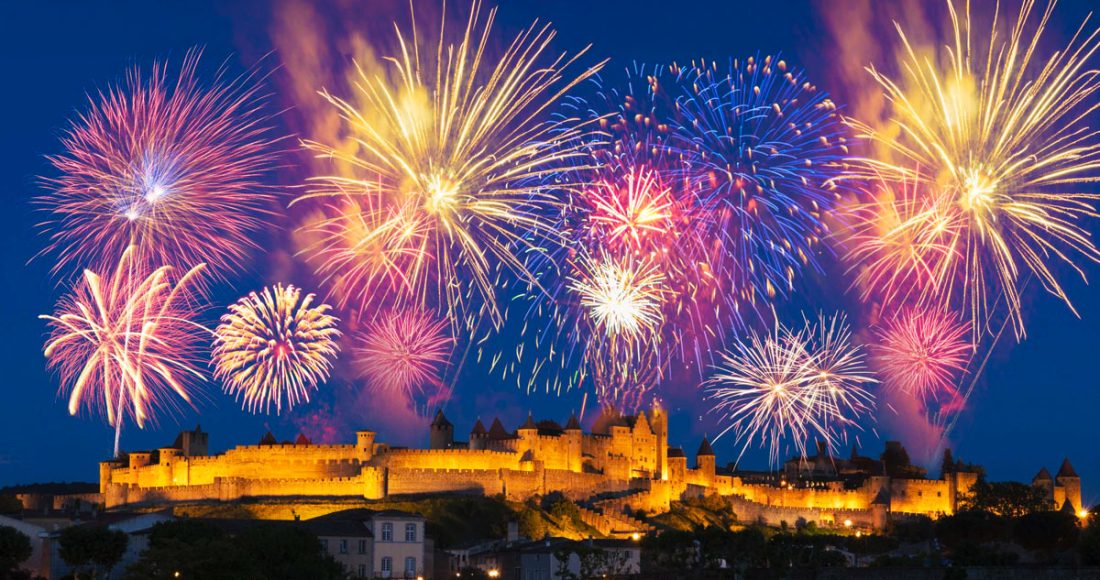
Few places celebrate France’s national day with the theatrical splendour of Carcassonne. Each 14 July, the medieval citadel becomes the centrepiece of an extraordinary evening in which fireworks sweep above its towers, light travels across its ancient ramparts, and the entire fortified city appears to glow against the summer sky. The occasion feels both deeply French and uniquely Carcassonnais—a civic celebration transformed by architecture, history and spectacle.
Known locally as L’Embrasement de la Cité, the event has illuminated Carcassonne since 1898 and is now regarded as one of France’s most recognisable Bastille Day displays. The celebration culminates with fireworks fired from the medieval city at approximately 10:30 p.m., following a full day of ceremonies, shopping, music and dancing across Carcassonne.
For Those Who Seek…
- A Bastille Day celebration framed by medieval architecture
- Grand-scale fireworks without the metropolitan pace of Paris
- Long summer lunches, regional wines and atmospheric dining
- A historic city that rewards several days of exploration
- A celebration combining ceremony, music and late-night spectacle
Legacy
Bastille Day commemorates the events that helped set the French Revolution in motion and now serves as France’s national celebration of citizenship, unity and republican identity. In Carcassonne, however, 14 July has developed a visual language entirely its own.
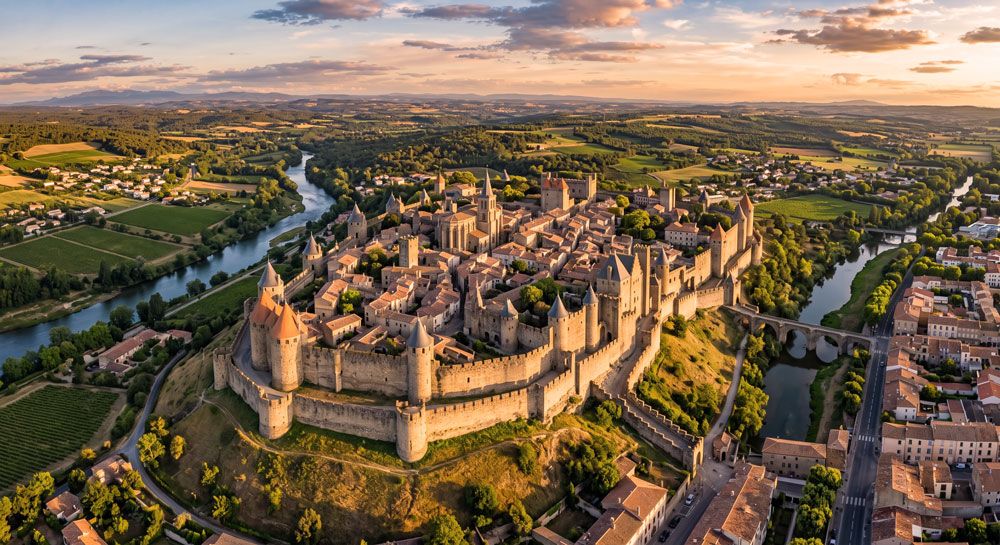
The city’s signature fireworks tradition began in 1898, when the medieval fortress was dramatically illuminated during festivities honouring the Cadets de Gascogne. More than a century later, the spectacle continues to use the fortified walls as a monumental stage, connecting national history with the romantic silhouette of one of France’s most extraordinary historic cities.
The Setting
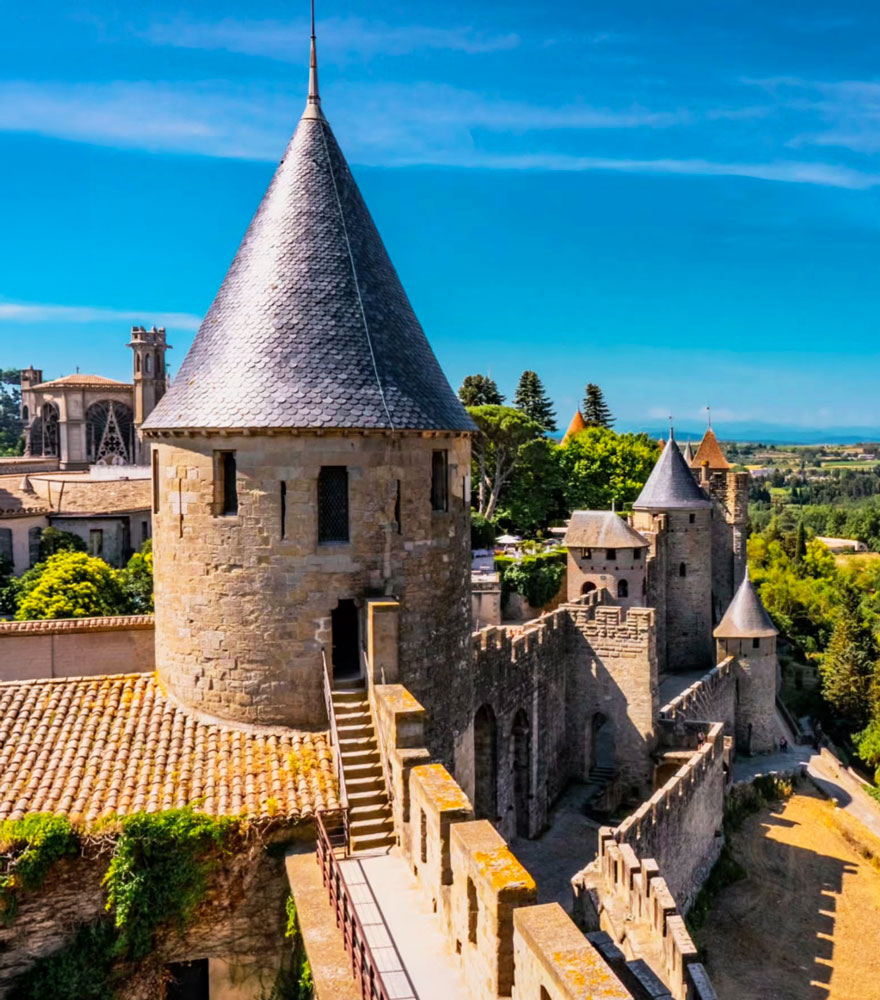
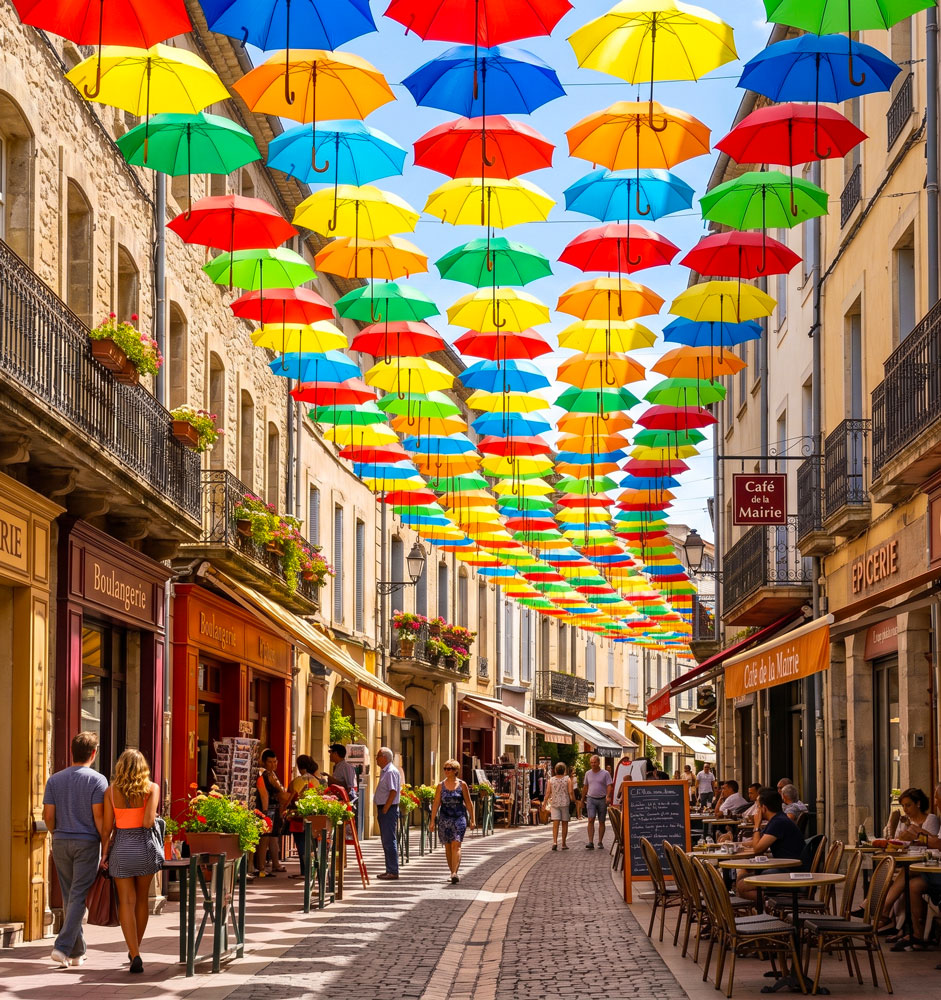
Carcassonne is divided between two distinct worlds. Above the River Aude stands the Cité Médiévale, enclosed by concentric defensive walls and crowned with dozens of towers. Below it, the Bastide Saint-Louis offers broad squares, cafés, boutiques and a more lived-in expression of the modern city.
During Bastille Day, the relationship between the two becomes especially dramatic. Celebrations unfold through the lower town while attention gradually turns toward the elevated citadel. By nightfall, the illuminated fortress seems suspended above the river valley, waiting for the first burst of light.
The Day Begins
Bastille Day in Carcassonne starts with a more ceremonial rhythm than its dazzling finale might suggest. The official programme traditionally includes a morning military ceremony and parade near Pont Neuf, bringing together uniformed services, standard-bearers, musicians and civic representatives.
Throughout the day, the Bastide becomes livelier as shops participate in the city-centre Grande Braderie. Streets fill with visitors browsing seasonal displays, pausing over coffee or extending lunch well into the afternoon. Music and public dancing around Place Carnot carry the celebration into the evening.
A Long Lunch in the South of France
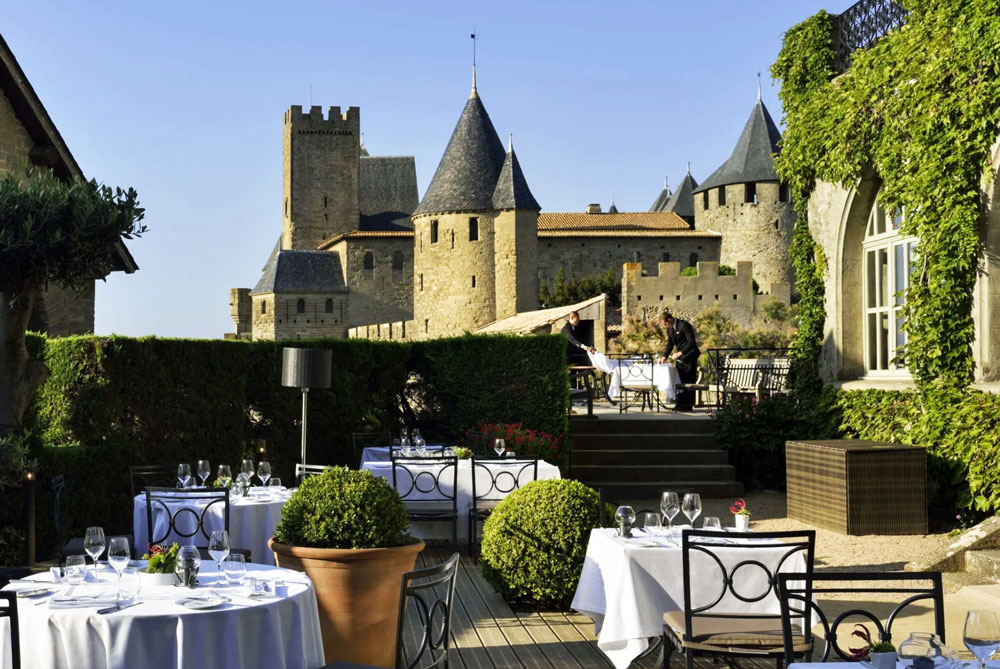
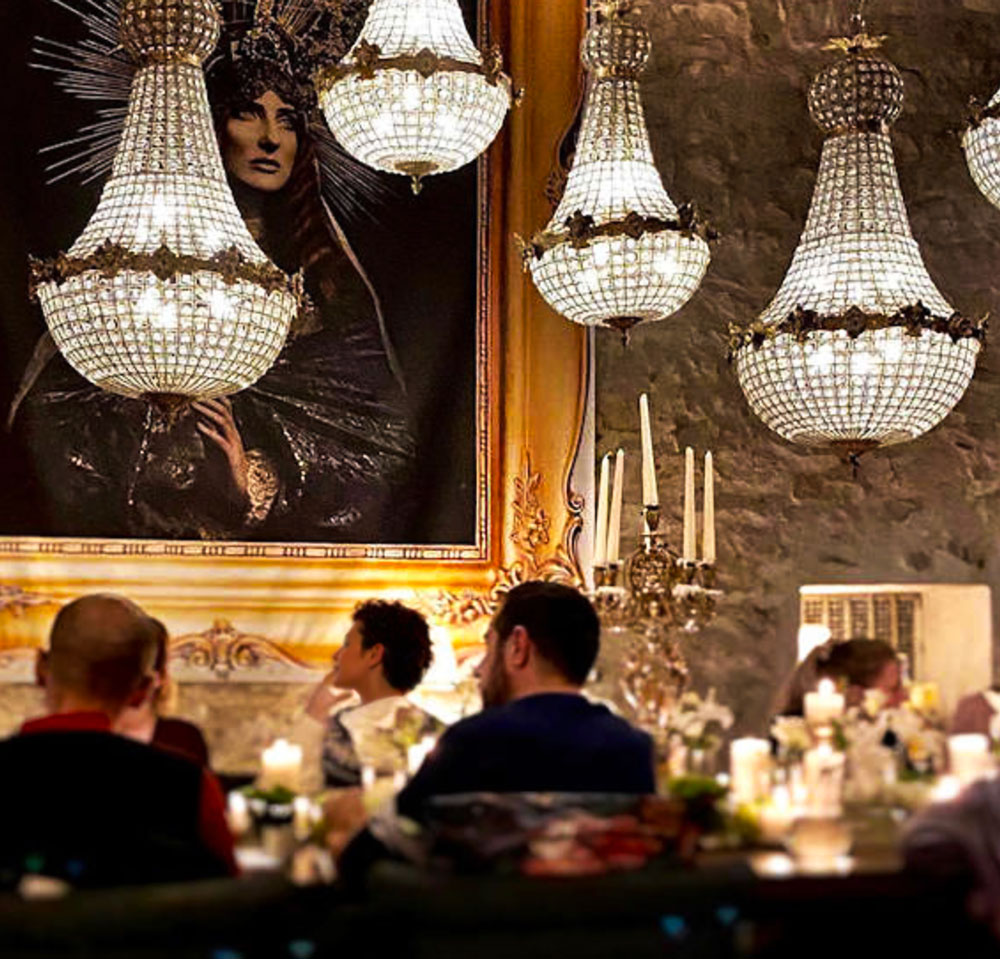
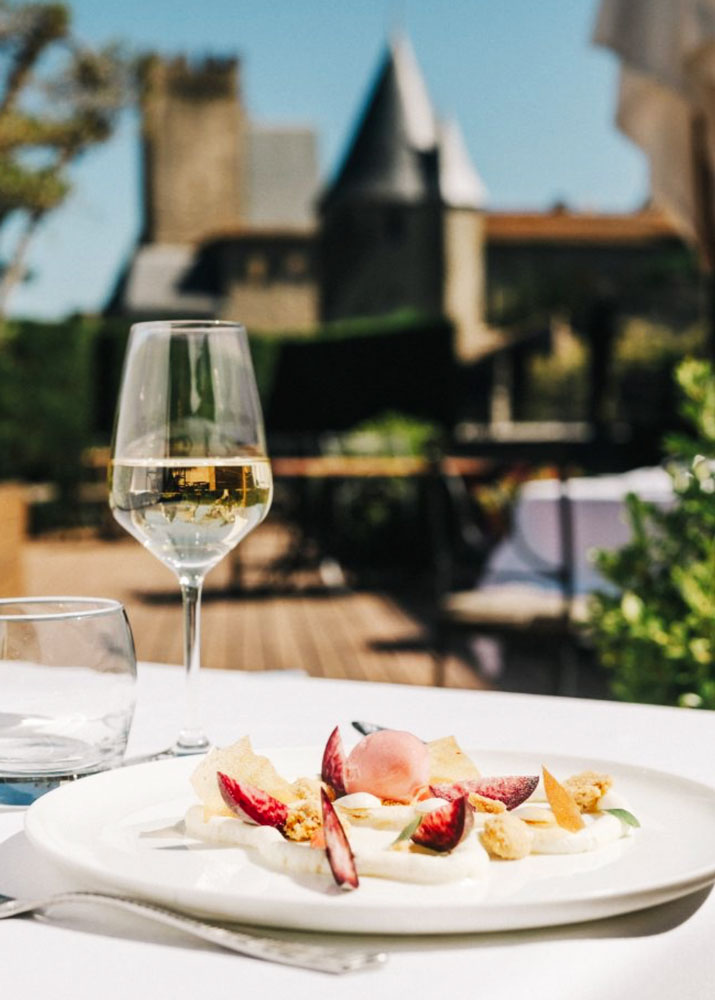
The hours before the evening spectacle are best approached slowly. Reserve a shaded terrace or a dining room overlooking the ramparts and allow lunch to stretch across several courses.
Cassoulet remains Carcassonne’s defining dish: a rich preparation of white beans and slow-cooked meats with numerous regional interpretations. In midsummer, however, lighter menus built around tomatoes, grilled fish, local cheeses and seasonal produce may feel more comfortable before an evening outdoors.
Wines from the surrounding Languedoc vineyards complete the setting. Crémant de Limoux offers an appropriately festive beginning, while bottles from nearby Minervois, Cabardès and Corbières connect the meal to the wider landscape of the Aude.
An Afternoon Within the Walls
The Cité Médiévale deserves time beyond a quick circuit of its main streets. Walk the ramparts, visit the Château Comtal and step inside the Basilica of Saints Nazarius and Celsus, where Gothic stained glass brings a softer form of illumination to the day.
As afternoon advances, the fortified city becomes increasingly busy. Travellers seeking a quieter experience should explore early, then return to their hotel before the evening crowds reach their height. Comfortable footwear is essential; medieval paving retains considerable charm but very little sympathy.
The Embrasement
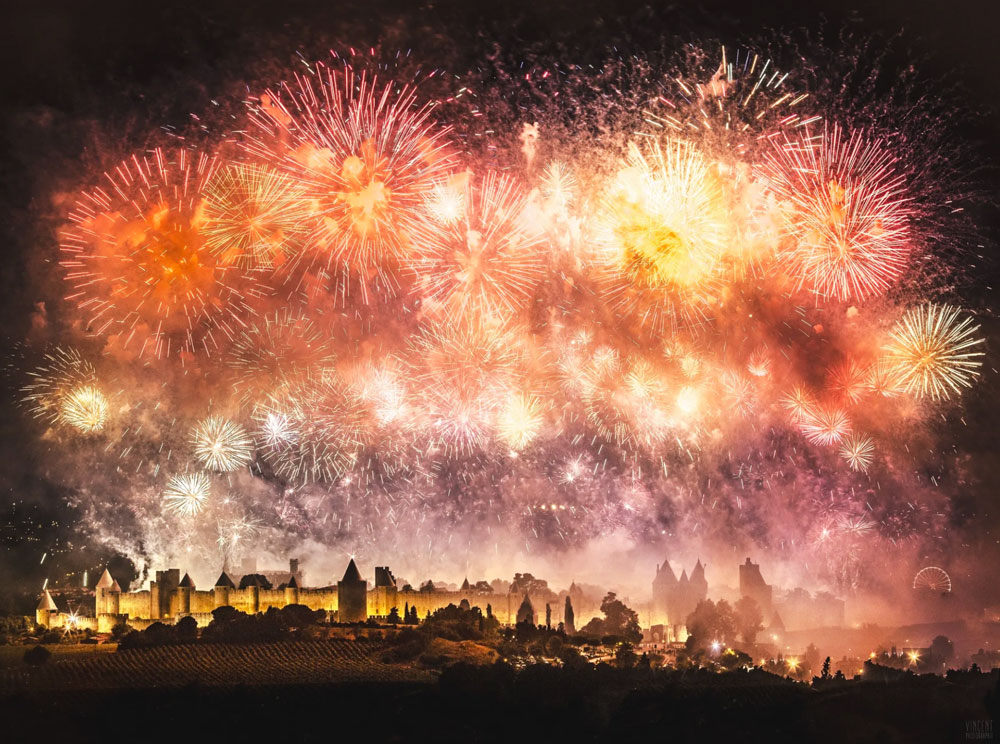
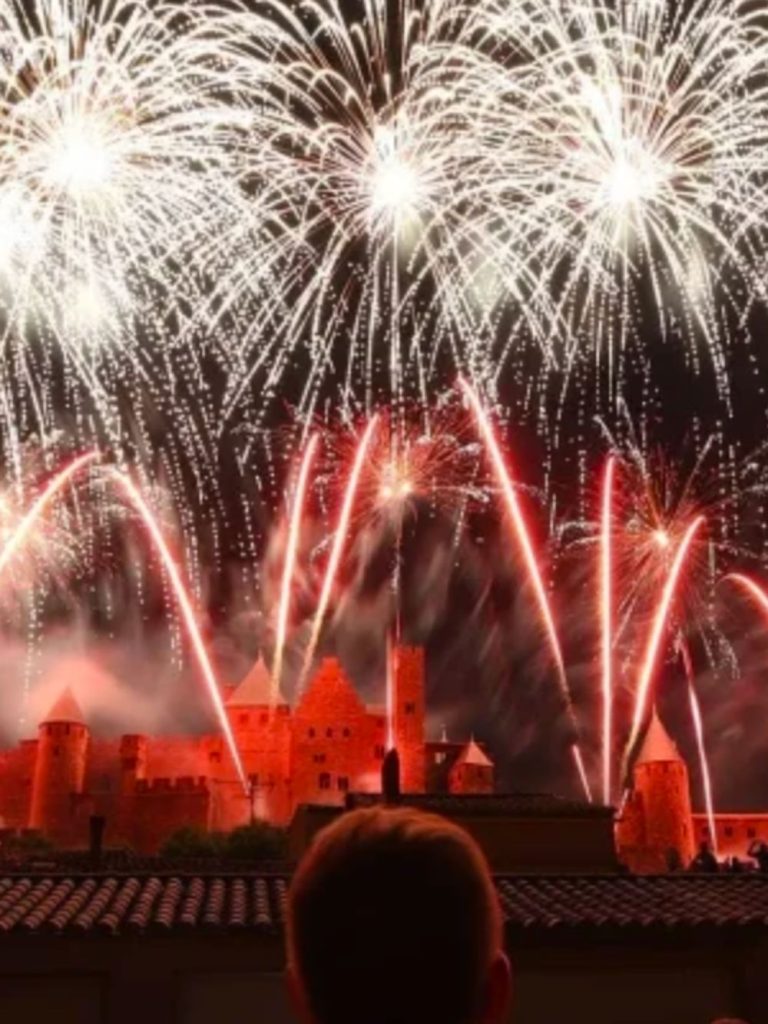
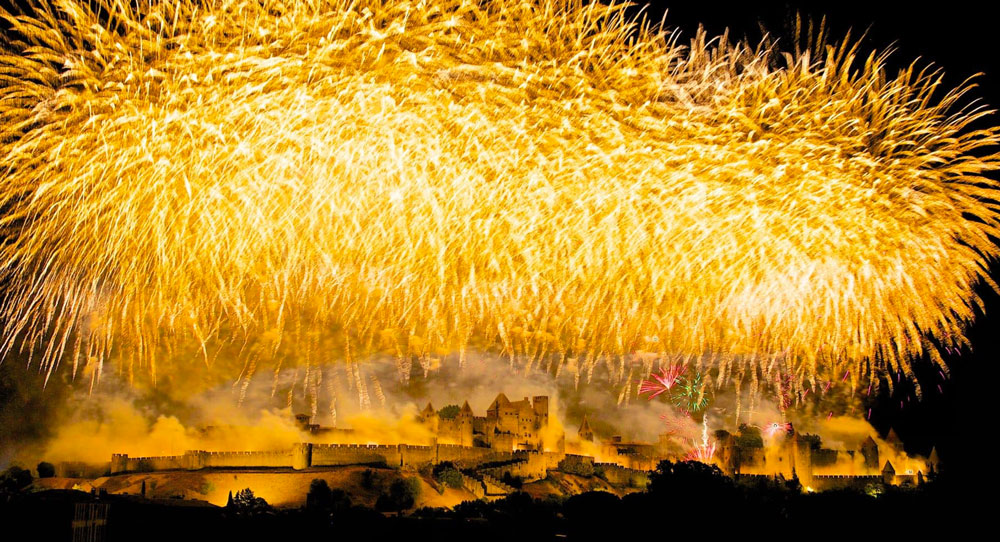
At approximately 10:30 p.m., the medieval city becomes the stage for a pyrotechnic performance lasting around 25 minutes. Fireworks are launched from the citadel while choreographed effects illuminate its northern and western façades, creating the impression that the ramparts are glowing, flickering and briefly consumed by light.
The scale is cinematic. Colour moves along the fortifications, golden cascades fall above the towers, and the final sequence fills the sky across hundreds of metres of historic stonework. It is less a conventional fireworks display than an architectural performance—one in which Carcassonne itself becomes the leading character.
Where to Watch
The most sought-after viewing areas are generally found outside the Cité, where the full outline of the fortress remains visible. The banks of the Aude and areas around Pont Vieux offer classic perspectives, although they also attract exceptionally large crowds.
Pont Neuf and sections of the Bastide can provide broader views, while selected hotels, restaurants and private terraces may offer a more composed experience. These elevated or reserved settings should be arranged well in advance, with exact sightlines confirmed directly with the property.
Whichever location is chosen, arrive several hours early. Reaching Carcassonne by late morning or early afternoon can reduce parking difficulties, particularly around the large paid car parks near the medieval city.
Dining After Dark
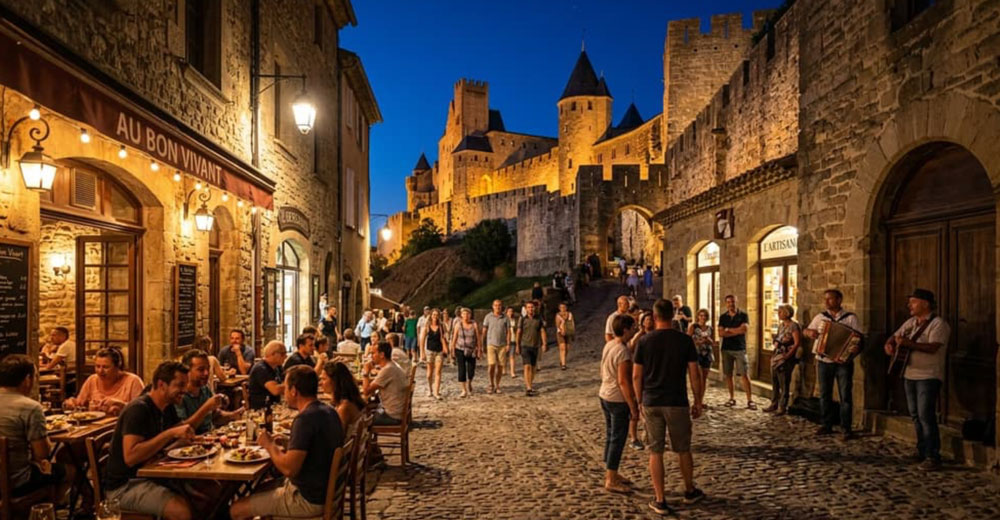
Dinner requires strategy. Restaurants become heavily booked, streets close or grow congested, and crossing the city immediately before the display can be difficult.
A late lunch followed by an early-evening apéritif is often the most graceful arrangement. Alternatively, reserve a restaurant offering a fixed Bastille Day menu and remain there until it is time to walk to the chosen viewing point.
After the fireworks, Place Carnot returns the celebration to street level. Music, café terraces and the bal populaireatmosphere keep the Bastide animated well beyond the final burst above the citadel.
Where to Stay
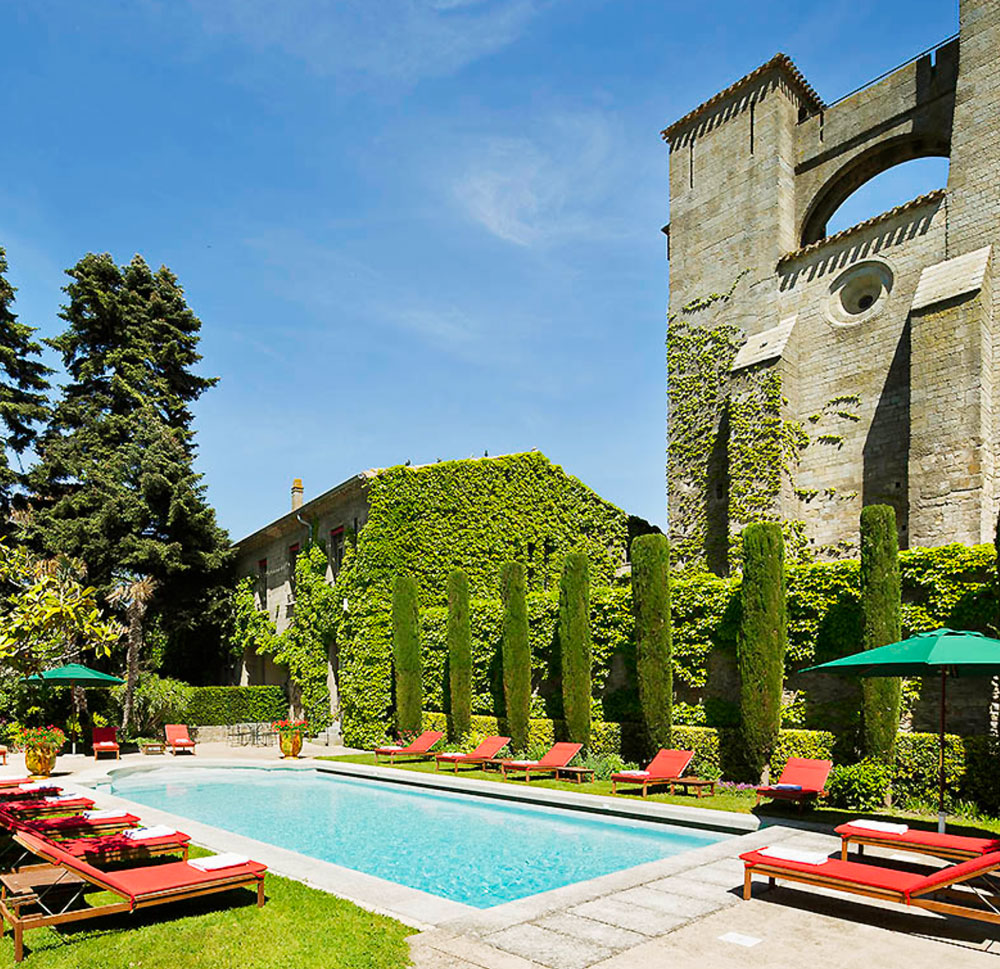
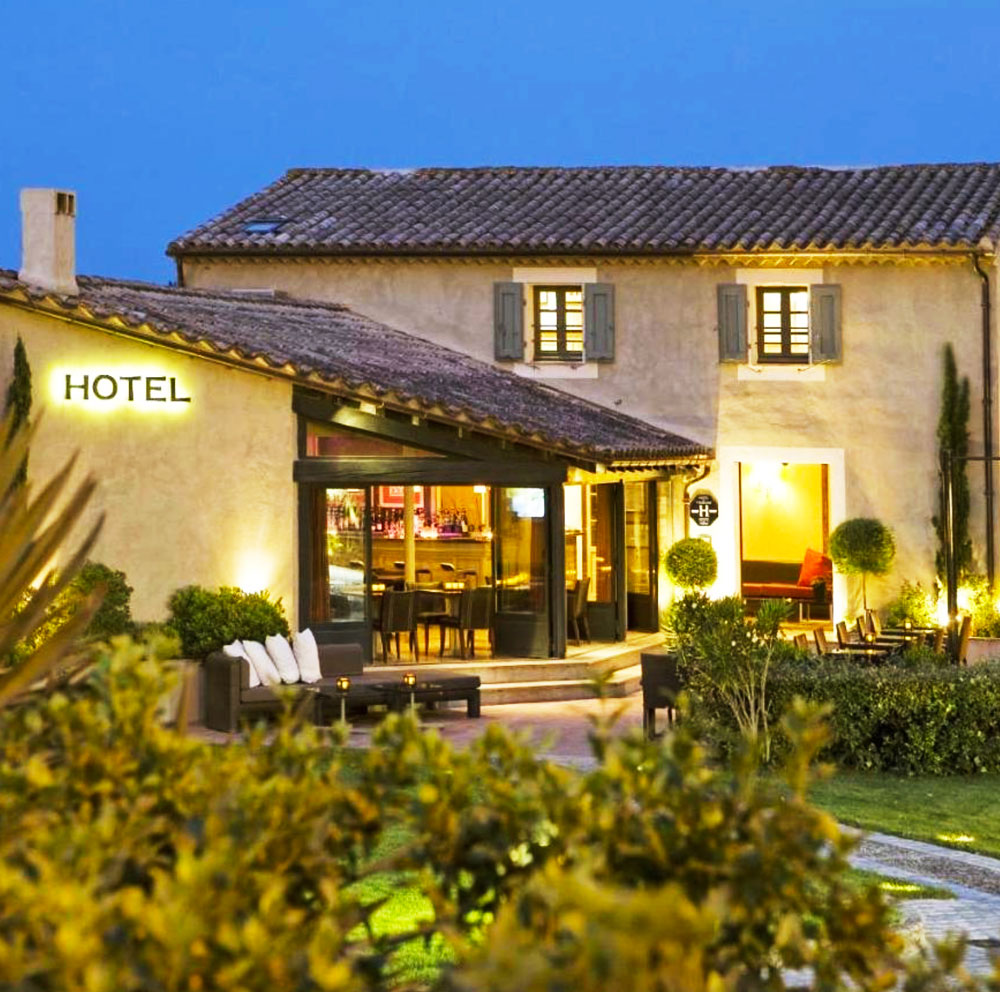
Hôtel de la Cité Carcassonne – MGallery
Positioned within the medieval walls, this historic hotel offers one of the city’s most atmospheric stays. Its gardens, traditional interiors and proximity to the ramparts make it especially compelling for a celebratory escape, although access arrangements should be confirmed for 14 July.
Hôtel du Château
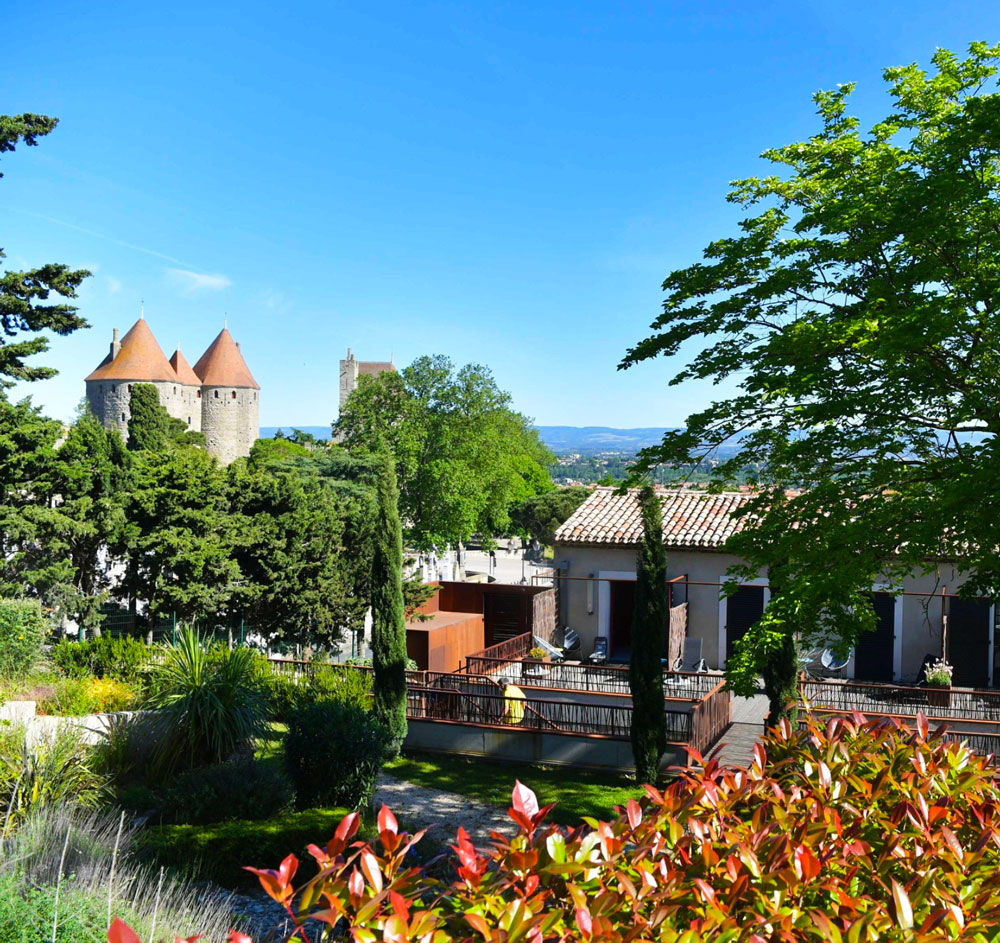
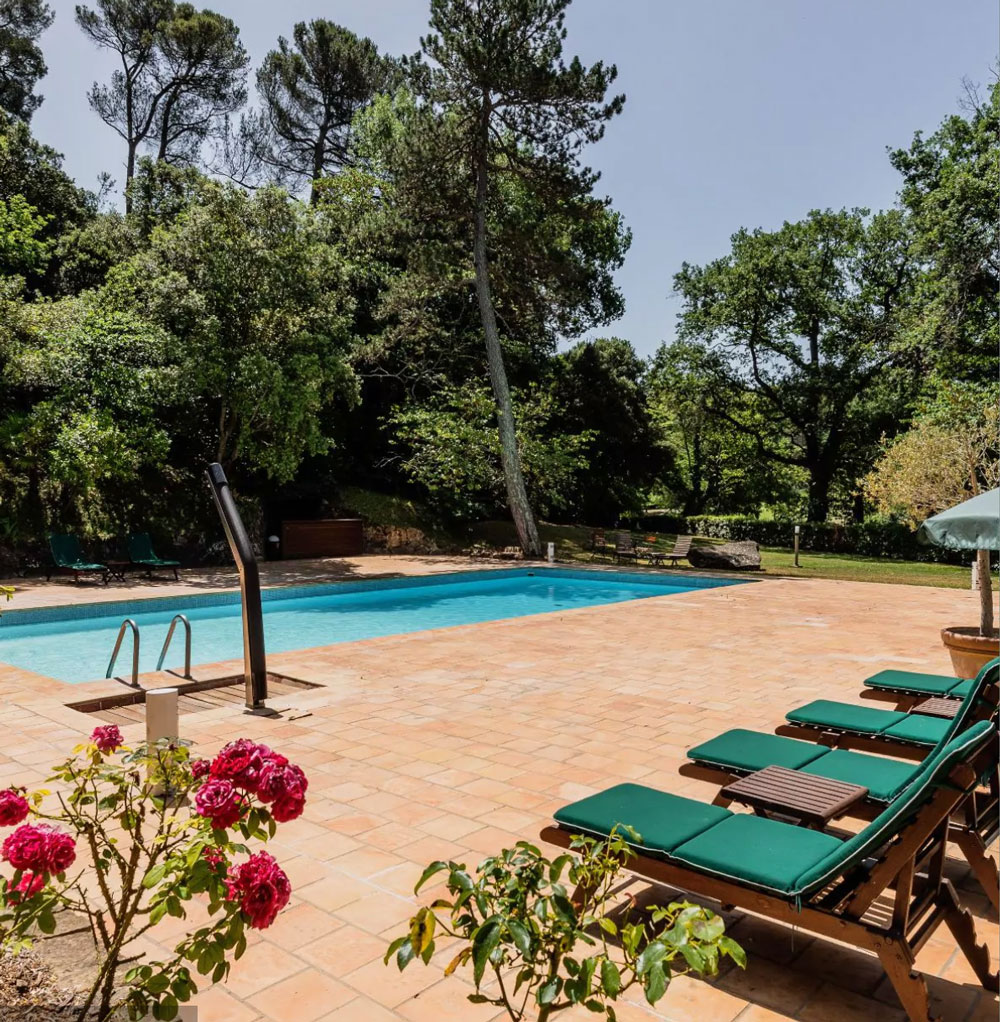
Located just outside the main entrance to the Cité, Hôtel du Château combines contemporary interiors with views of the fortifications. Its swimming pool and terrace offer a welcome retreat from the summer crowds.
Hotel Pont Levis
A modern boutique property near Porte Narbonnaise, Hotel Pont Levis places guests close to the medieval city while maintaining a quieter residential feel. Its gardens and pool create a useful pause between sightseeing and evening festivities.
Domaine d’Auriac
Set beyond the historic centre, Domaine d’Auriac provides a more secluded country-house experience with established dining, landscaped grounds and a golf course. It suits travellers who prefer to observe Carcassonne’s celebrations before returning to a calmer setting.
48 Hours in Carcassonne
Day 1
Morning
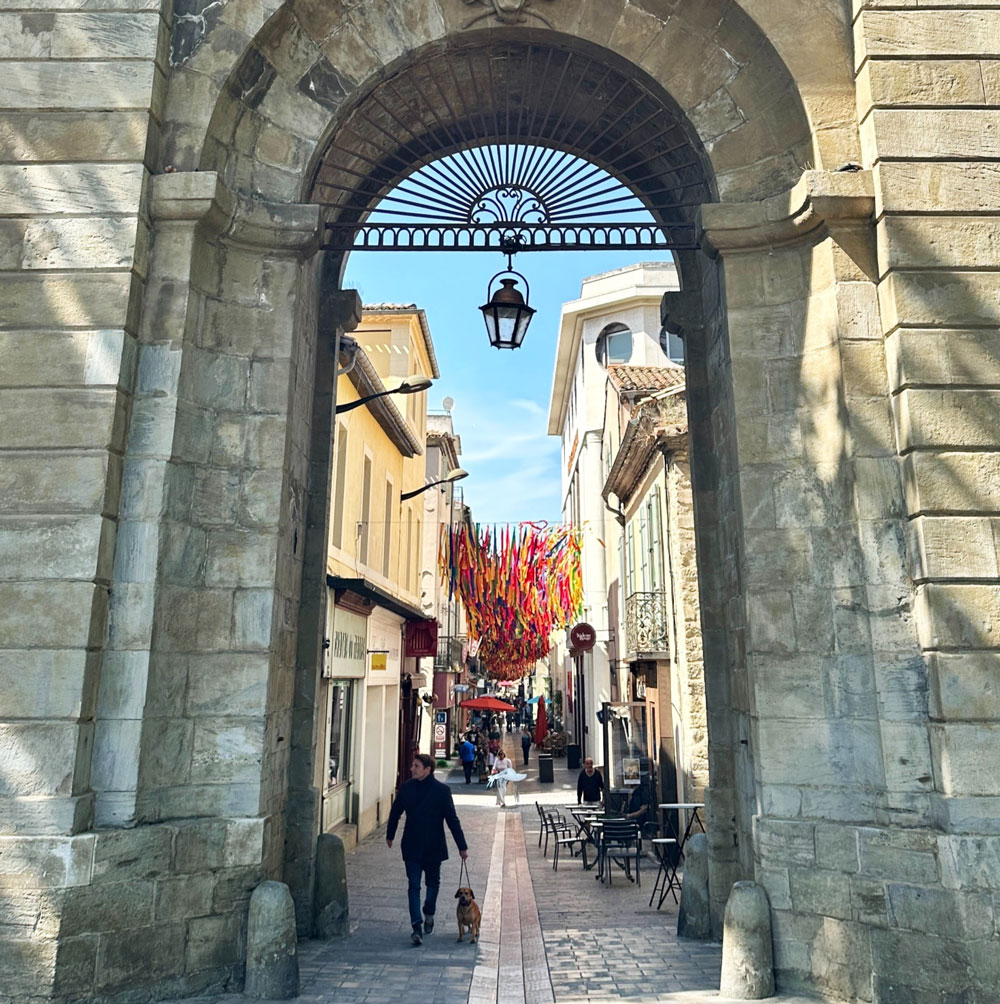
Arrive in Carcassonne and settle into the hotel before walking through the Bastide Saint-Louis. Explore Place Carnot, browse the market area and cross Pont Vieux for the first full view of the medieval city.
Afternoon
Enter the Cité Médiévale and visit the Château Comtal, ramparts and basilica. Pause for an apéritif before dining within or just outside the fortified walls.
Evening
Walk the outer fortifications as the stone changes colour in the setting sun. Keep the first evening relaxed; the following night belongs to the celebration.
Day 2 — Bastille Day
Morning
Attend the official ceremony near Pont Neuf or enjoy a quieter breakfast before exploring the city-centre sale. Complete any sightseeing early, before visitor numbers increase.
Afternoon
Settle into a long lunch accompanied by wines from the surrounding region. Return to the hotel to rest, change and prepare for the evening.
Evening
Begin with an early apéritif, then move to the chosen viewing area well before sunset. Watch the Embrasement illuminate the medieval city at approximately 10:30 p.m., followed by music and celebrations around Place Carnot.
Keepsakes
Celebrating Bastille Day in Carcassonne is not simply about watching fireworks. It is the experience of seeing an entire city turn toward its most enduring landmark, waiting together as darkness settles over the Aude and the first light rises above the ramparts.
For one summer night, towers become silhouettes, medieval walls become a canvas, and French history is expressed not through solemnity but through colour, music and collective celebration. Paris may command the grand boulevards, but Carcassonne has the castle—and on 14 July, that is a formidable advantage.